Two Ceremonies, One Story: Filming the Legal Bit Without Losing the Feeling
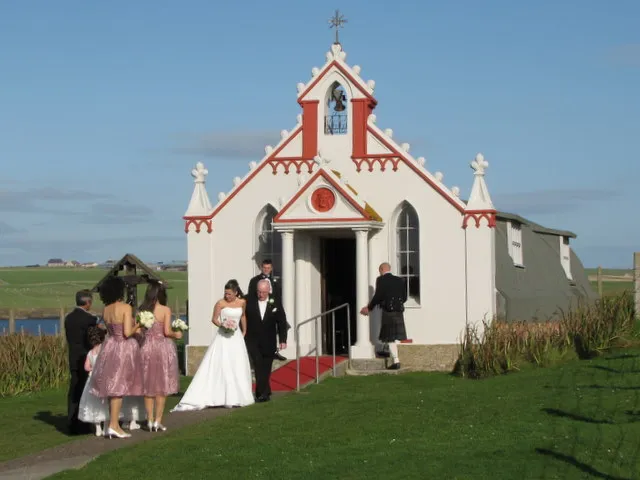
Photo: sylvia duckworth, CC BY-SA 2.0, via Wikimedia Commons
The shape of a British wedding
Most UK wedding films aren't really filming one ceremony. They're filming two. There is the legal bit — the registrar or vicar, the statutory declarations, the register signing, the words that have to be said for the marriage to exist in law. And then there is the real bit, or at least the bit that feels most like the couple: personal vows, readings, a celebrant-led ceremony, music, laughter, a friend doing a reading and getting a bit wobbly halfway through.
Sometimes those two halves happen back to back in the same room. Sometimes the legal ceremony is at a register office on a Tuesday and the big celebration is at a barn on Saturday. In Scotland, a humanist ceremony can be the legal one; in England and Wales, it usually can't, so couples often separate the paperwork from the party. However it's arranged, the film has to hold both halves without making one feel like a warm-up for the other.
The legal bit isn't paperwork
It's easy to treat the statutory section as the administrative bit — the bit you have to get through before the good stuff. But on camera, it often does something unexpected. The legal words are formal, repetitive and slightly old-fashioned, and that's exactly why they land. When a registrar asks a couple to confirm their names and declare that they know of no lawful impediment, the room goes quiet in a different way. It's not romantic in the usual sense. It's serious. It's real. The state is in the room.
That seriousness is worth filming properly. Not as a box-ticking exercise, but as a texture. The couple's hands. The witnesses leaning in. The pen on the register. The registrar's calm, practised voice. The slight shuffle when someone isn't sure where to sign. These are the details that remind you this isn't a performance. It's a thing happening.
Filming the handover
The hardest part is the join. If the legal ceremony and the personal ceremony happen in the same space, there's often a slightly awkward pause while the registrar packs up and the celebrant takes over, or while chairs are moved and guests resettle. In the film, that pause can be an asset. Don't rush it. Keep the room tone. Let the camera stay wide for a beat. The handover is where the film can show the shift from official words to chosen words without a title card or a big music cue.
In the edit, we often braid the two together rather than separating them into neat chapters. A line from the legal declaration can sit under a shot of the couple getting ready. A registrar's phrase can echo into a personal vow. The aim is not to disguise the legal bit, but to make it part of the same story. The same faces are in both rooms. The same hands. The same slightly nervous laugh.
Two halves, two textures
The legal ceremony usually has a fixed shape: welcome, declarations, vows, rings, signing. It is calm, upright, procedural. The personal ceremony has a looser shape: stories, readings, promises, maybe a song, maybe a friend crying in the front row. Filming them the same way would flatten the contrast.
So we let the legal bit be still. Wide shots. Close-ups of the register. Natural sound. Very little movement. Then the personal bit can breathe differently: more movement, more reaction shots, the celebrant's voice, the couple's own words filling the room. The contrast isn't a problem to be solved. It's the emotional engine of the film. One half says: this is official. The other says: this is us.
What to ask couples beforehand
It helps to know exactly how the day is structured before the cameras roll. Are the legal and personal ceremonies on the same day? Is the register office separate? Will the registrar allow filming during the signing? Does the church have its own rules about camera positions? Some registrars are relaxed; some are not. Some churches charge a fee for filming; some ask you to stay in one spot. None of that is a reason to panic, but it is a reason to ask early.
It's also worth asking which words matter most. Some couples care deeply about the statutory vows; others see them as a necessary formality and put all their feeling into the personal ceremony. A wedding film should know the difference. The legal bit doesn't need to be inflated into something it isn't, but it shouldn't be skimmed either.
The bit that makes people cry
In the end, the reason two-part UK ceremonies work so well on film is the contrast between the words you have to say and the words you choose to say. The legal bit is short, plain and binding. The personal bit is long, specific and full of risk. Put them next to each other and you get something no single ceremony quite manages: the feeling of a couple being married by the state and loved by the room at the same time.
That's the story. Not paperwork versus party. Just two kinds of promise, filmed with the same attention.