The Best Bit Isn't the Pose: Filming the Seconds Either Side of It
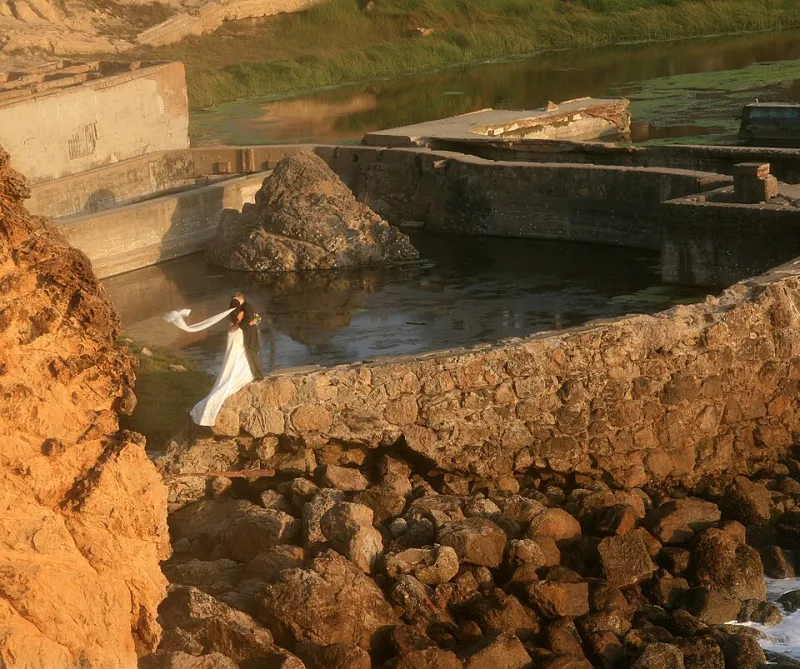
Photo: Brocken Inaglory, CC BY-SA 3.0, via Wikimedia Commons
The pose is the punctuation, not the sentence
Every wedding day has its choreography. In a UK registry office, the registrar asks you to sign the book and turn towards the camera. In a church, the vicar suggests a kiss on the steps. In a marquee, someone arranges the confetti line and tells everyone to cheer. These are the beats everyone knows. They're not bad. They're just not the whole story.
The shot everyone remembers is often the half-second after: your new spouse muttering 'we did it', your mum exhaling in the doorway, a bridesmaid hiking up her dress to rescue a shoe from wet grass. We call it the 10-second rule. Not because ten seconds is magic, but because that's roughly how long it takes for the performance to fall away after a camera has been pointed at you. The shoulders drop. The laugh becomes real. Someone whispers something they wouldn't say in front of a photographer's lens. Those are the frames that make a wedding film feel like a memory rather than a montage.
What we're looking for in those ten seconds
We're not hunting for embarrassing bloopers. We're watching for relief, mischief, tenderness, and the tiny negotiations of a couple getting through a big day together. A groom adjusting his partner's veil on a windy church porch. A bride stealing a chip from a guest's plate in a marquee. A father-of-the-bride checking his watch, then deciding to stop checking it.
A good wedding film needs structure, but it also needs air. If every second is posed, the edit has nothing to breathe with. The formal photographs are the scaffolding. The ten seconds either side are the rooms you actually want to live in.
Registry office steps and church porches
Town hall steps are a gift and a trap. Everyone crowds in for the confetti shot, and the couple is told to kiss, then kiss again, then look at the camera. The gold is usually just after that: the couple walking down the steps, thinking the filming has stopped, laughing at a friend's joke or trying to keep confetti out of someone's eye.
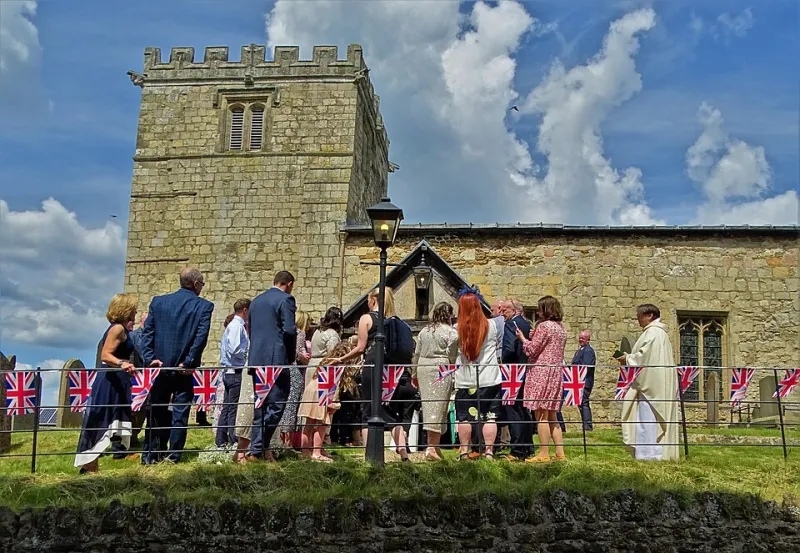
Church porches are similar. There's the posed exit, the bell-ringing, the confetti line. Then there's the bit where the couple turns to each other and says something like 'we're married' or 'I need a cup of tea'. That's the line we want in the film. It's not scripted, but it's the truth of the day.
Marquees and village halls are different. The emotional beats are less formal, but they're still there: a grandmother being helped across a damp field, a couple stealing five minutes alone by the catering tent, a best friend redoing their speech notes in the corner. Those moments don't announce themselves. They happen in the gaps between the schedule.
How to give your filmmaker room without losing control of the day
You don't need to turn your wedding into a documentary. You just need to leave a few doors open.
First, tell your filmmaker which moments matter most, then let them watch rather than direct. If you want footage of your grandparents, say so. If you'd rather not be filmed crying during the speeches, say that too. Clarity helps us know where to stand and when to step back.
Second, build in small buffers. Ten minutes between the ceremony and the drinks reception is not dead time. It's the bit where people relax, hug, and say the things they actually mean. A schedule with no gaps is a schedule with no discoveries.
Third, don't perform for the camera. This is easier said than done, but the best couples treat the lens like a piece of furniture. If you're walking somewhere, talk to each other. If you're waiting, look at each other, not at us. The moment you start acting for the film, the film starts acting back.
Finally, trust the boring bits. A wide shot of a rainy car park in Leeds doesn't sound romantic, but it sets the scene. A close-up of hands fidgeting with a ring is worth more than a dozen posed smiles. The ten-second rule works because it captures what happens when you forget to be photographed.
The difference between being filmed and being watched
There's a fine line between documentation and surveillance. We don't want to hover. We want to be part of the furniture: present enough to catch the moment, distant enough that you forget we're there. That's why we often film with long lenses from across the room, or stand near the exit when the couple is about to leave.
For couples, the practical version of this is simple: give your filmmaker permission to be bored. The best footage often comes from waiting. If you see us standing still while everyone else is doing a group shot, we're not slacking. We're watching the edges.
And if you're worried about feeling awkward, remember that everyone feels awkward. The trick is not to eliminate the awkwardness but to let it be human. A wedding film isn't a highlights reel of perfection. It's a record of two people getting married in front of the people they love, with all the fidgeting and whispering and weather that entails.