The Ten Metres Before I Do: Filming the Aisle Walk Without Turning It Into a Performance
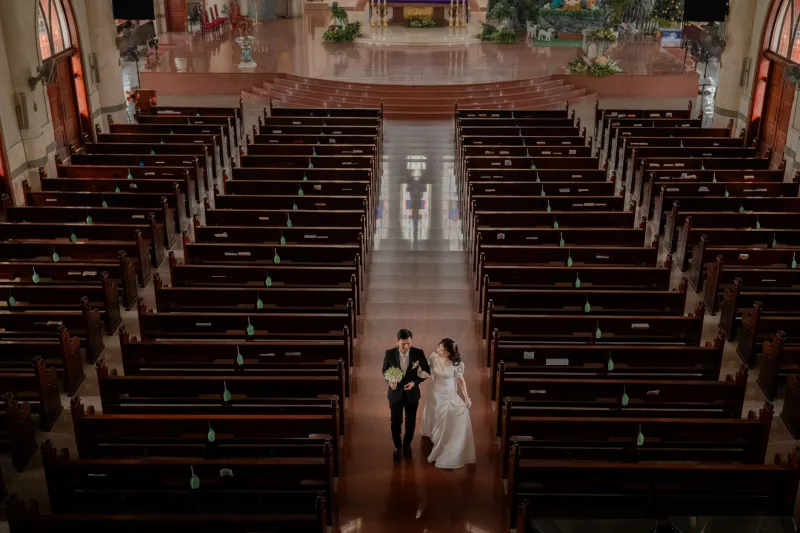
There’s a moment, usually about ten metres from the front, when the aisle stops being a walk and becomes a room full of faces. The doors open, the music shifts, and everyone turns. It’s the bit couples often think about most — and the bit most likely to be over-directed. At Ceremony, we treat it as a live event, not a photo op. The best aisle footage rarely comes from telling people where to look. It comes from knowing where the feeling is going to happen before it does.
The waiting room is where the film starts
Long before the aisle, there’s a small room with bad lighting and excellent atmosphere. Someone is doing up a button. A mum is holding a bouquet like it’s a difficult pet. A dad is pretending to read the order of service for the fourth time. This is where the nerves live, and it’s worth filming properly.
We keep the camera light and the lens long. No barking instructions, no “just one more” as someone is trying to breathe. A quiet lens in the corner often catches more than a big setup in the middle of the room. If there’s a mirror, we use it — not for a staged reflection shot, but because people look at themselves when they’re steadying their nerves. A deep breath, a laugh, a hand on a shoulder: that’s the pre-roll for the aisle, and it makes the walk mean more when it finally happens.
The hand-off deserves two shots, not twenty
The parent hand-off is a lovely, awkward, very human bit of ceremony. It doesn’t need choreography. What it needs is a quick conversation beforehand: who is walking, where they’ll stop, whether there’ll be a hug or a kiss, and whether anyone is likely to say something funny. We don’t need a script. We just need to know where to stand.
Our usual approach is simple. One camera stays wide at the front, holding the whole aisle and the waiting partner’s face. A second camera works from the side, tighter on hands and expressions. That way we get the handshake, the squeeze, the whispered joke and the moment the walking party steps back — without anyone having to repeat it. If the venue has a tight aisle or a registrar who prefers a clear route, we adapt. The camera moves; the couple doesn’t.
And please, don’t ask your dad to pause halfway for a photograph. The pause is never as natural as the actual walk. The real footage is in the half-second after the hand-off, when he looks at you and then steps away. That’s the bit you’ll want later.
The first look is a reaction, not a cue
At the front, the waiting partner is doing the hardest job in the room: standing still while everyone watches them not turn around. We don’t tell them to look. We don’t count them down. We film the back of their head, their hands, the way they shift their weight. Then, when the walk begins, we let the reaction happen.
A long lens from the front-side is our friend here. It gives us the face without putting a camera between the couple. A second angle from the back of the room catches the aisle in context — the guests turning, the light changing, the doors closing. If the couple are walking in together, we adjust: the reaction becomes the room’s reaction, and the film leans on the faces in the pews or chairs. Either way, the rule is the same. We anticipate. We don’t direct.
Microphones and the sound of nerves
Aisle footage without sound is just a slow-motion walk. We want the real stuff: footsteps on stone, a dress moving over carpet, a nervous laugh, the celebrant’s welcome, the rustle of order sheets. In a church, we check with the vicar before placing any microphone. In a registry office, we ask the registrar what’s allowed. In a barn or hotel, we keep an ambient mic near the front and a lapel on the celebrant if they’re happy with it.
We don’t wire couples unless they’ve asked for it. Nerves sound different when someone knows they’re being recorded, and the aisle is not the moment to add another thing to think about. A well-placed room mic and a camera operator who knows when to stay quiet will do more for the film than any amount of equipment.
Etiquette for staying invisible
The best compliment we get after a ceremony is “I forgot you were there.” That doesn’t happen by accident. We speak to the venue, the registrar or the vicar beforehand. We dress like guests, not like a crew. We don’t stand in the aisle during the walk. We don’t use a flash. We don’t ask guests to move, and we definitely don’t scold an auntie for holding up her phone — we work around her. If the couple have asked for an unplugged ceremony, we respect that too; our job is to film the day, not police it.
What we do in the edit
The aisle walk is not a montage opportunity. We don’t slow every step down, add a fake lens flare and call it emotion. We use real time where it matters. We cut between faces — the waiting partner, the walking party, the guest who always cries, the friend trying not to laugh. We let the hand-off breathe. We let the first look land. Then we move on, because the ceremony has its own rhythm and the film should follow it.
The ten metres before “I do” are not a runway. They’re a room full of people watching someone they love try to keep it together. Film that honestly, and it stays alive long after the confetti’s been swept up.