Candlelight, Lamplight and the 3.58 Sunset: Filming a Winter Wedding That Comes Alive After Dark
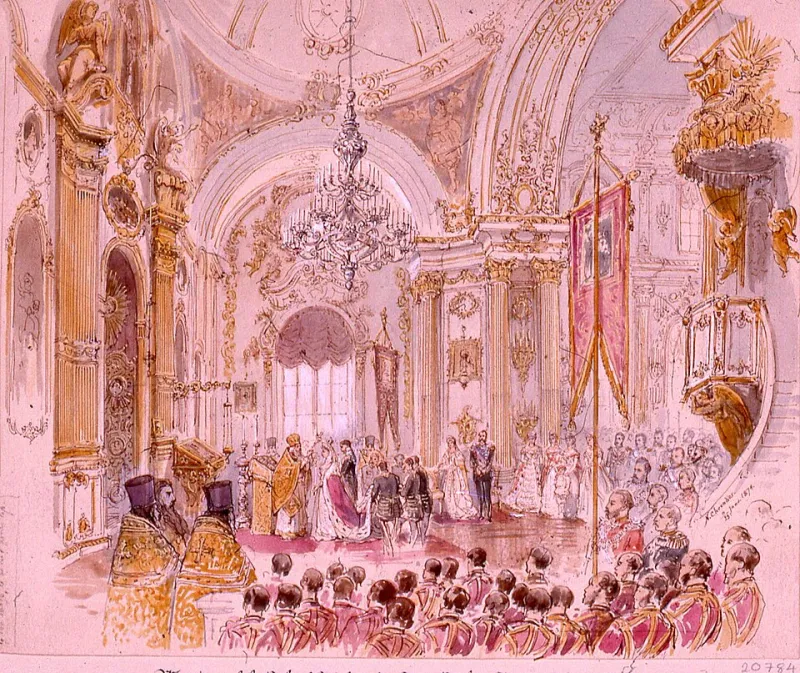
Photo: Nicholas Chevalier (1828-1902), Public domain, via Wikimedia Commons
The sun isn't being difficult — it's just on GMT
There is a particular moment in a British winter wedding when you look up from the back of the ceremony room and realise the windows have gone blue. Not black yet, just that deep, velvety blue that means the afternoon has quietly left. In London in mid-December, sunset lands somewhere around four o'clock. Head further north, or pick a cloudy day in Cumbria, and the light can clock off even earlier. For winter 2026 couples, that isn't a disaster. It's a brief.
A winter wedding film has a different rhythm from a June one. The day doesn't stretch out in front of you; it folds in. The trick is not to fight that fold. Plan for it, film into it, and let the darker half of the day do something the summer can't: make everything feel closer, warmer and a little more secret.
Build the timeline backwards from the light
The most useful thing you can do is ask your photographer and videographer for the sunset time at your actual venue, on your actual date. Not a generic 'about four'. Then work backwards. If your ceremony is at two, you have roughly two hours of usable daylight afterwards — and that time disappears fast once you add confetti, hugs, group photos and a walk to the reception room.
So front-load the things that need daylight. Confetti straight after the ceremony, not after the drinks reception. Couple portraits immediately, even if it means borrowing ten minutes before the room fills up. Any wide establishing shots of the venue and grounds should be captured before the ceremony, not after. If you're having a first look, a winter wedding is one of the best arguments for it: it gives you a calm, beautifully lit moment before the day properly accelerates.
It also helps to be a bit ruthless with the schedule. Speeches before the meal, cake cut earlier, sparklers straight after dinner — these aren't radical ideas, and lots of UK venues are used to them. The aim isn't to cram everything into daylight. It's to make sure the moments that genuinely need the sun aren't left waiting until it has gone.
What to film before the light goes
Winter daylight is low, soft and surprisingly flattering. It doesn't demand much. The things that benefit most are the ones with texture: breath in the air, wool coats, a veil moving in a cold breeze, the venue exterior with lamps just starting to glow, children running across wet gravel. Get the wide shot of the ceremony room early, while the windows still have something in them. Film the details — rings, order of service, flowers — near a window rather than under a ceiling light.
And don't overlook the ordinary bits. A winter wedding often has more layers: coats being helped off, boots being swapped, hands warmed around a cup of tea. These small, cold-weather rituals are exactly the kind of footage that makes a film feel like a real day rather than a styled shoot.
After dark isn't a downgrade
Once the light goes, the wedding doesn't stop. It changes. Reception rooms become pools of candlelight and lamplight. Speeches are lit by table lamps and fairy lights. The dancefloor is a different kind of cinema. A good winter wedding film leans into that instead of trying to recreate midday.
Practically, that means filming faces near light sources rather than blasting the room with something harsh. It means letting shadows stay shadows. It means using the venue's existing lamps, candles and windows rather than turning the reception into a TV studio. Couples often worry that a dark room will look gloomy on camera. Usually the opposite is true: darkness gives the light somewhere to sit.
Rain on the windows is a gift, not a problem. It softens the outside world, gives the frame movement and makes the inside feel more intimate. The same goes for condensation on a glass, a wet umbrella by the door, the glow of a streetlamp through a gap in the curtains. These are the details that make a winter film feel like winter, rather than a summer wedding with the heating on.
A four o'clock curfew is a framing device
It can feel odd to talk about a wedding day as if it has a curfew, but that's what winter gives you: a natural dividing line between the bright, busy part and the warm, close part. The couples who enjoy their winter films most are usually the ones who stop treating the early sunset as a theft and start treating it as a scene change.
So build the day around the light, get the daylight moments in the can, then let the lamps and candles take over. A winter wedding film doesn't need to be bright all the way through. It needs to feel like the day you actually had — cold outside, warm inside, and all the better for it.