The Camera Doesn't Have to Be the Guest of Honour: filming a UK ceremony that still feels like yours
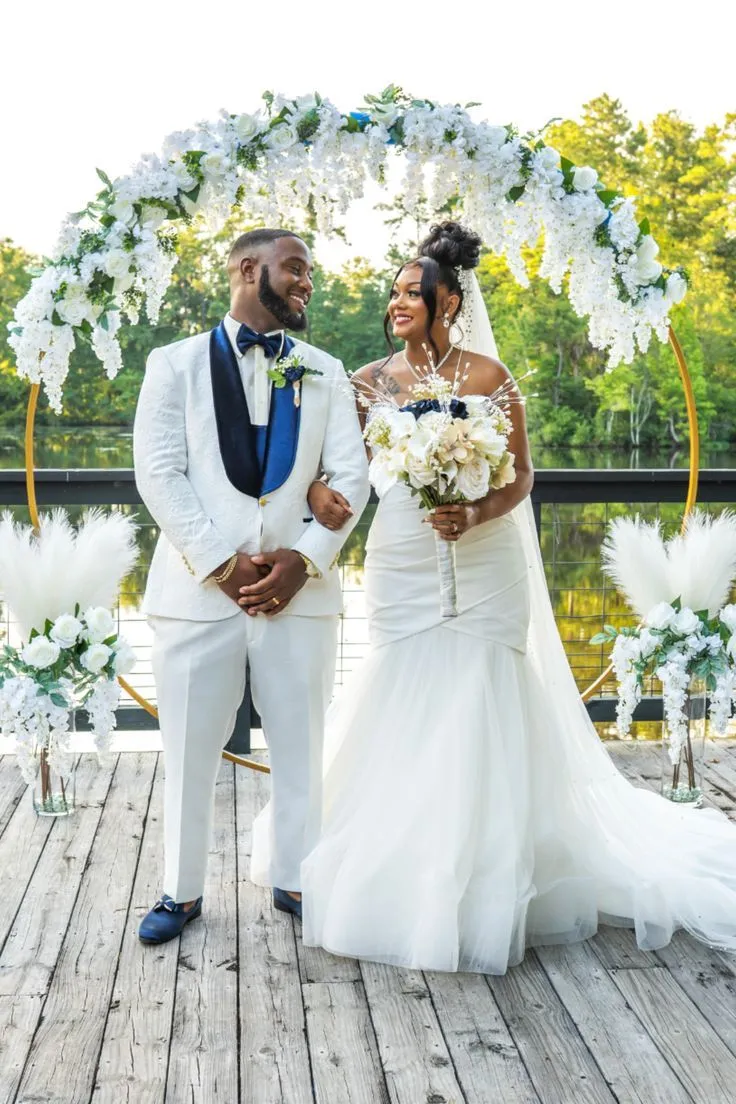
There's a moment at nearly every wedding where one of you catches sight of the camera and something shifts. Shoulders come up, the chin lifts a touch, the smile goes a bit fixed. It lasts about a second and a half. It's also, almost always, the only part of the day that looks like a performance.
So here's the reassurance up front: you can't really wreck your ceremony by being camera-shy. You can only wreck it by trying to be good at being filmed. The footage that ends up carrying a film is rarely the footage of the two of you. It's your dad's jaw tightening during the second reading. It's your nan locating a tissue somewhere deep in her handbag. It's the fumbled ring, the registrar stumbling over a surname, and the ripple of laughter that finally loosens the room.
That's the stuff we're hunting for. It lives at the edges of the moment, not in the middle of it.
Permission comes before any camera
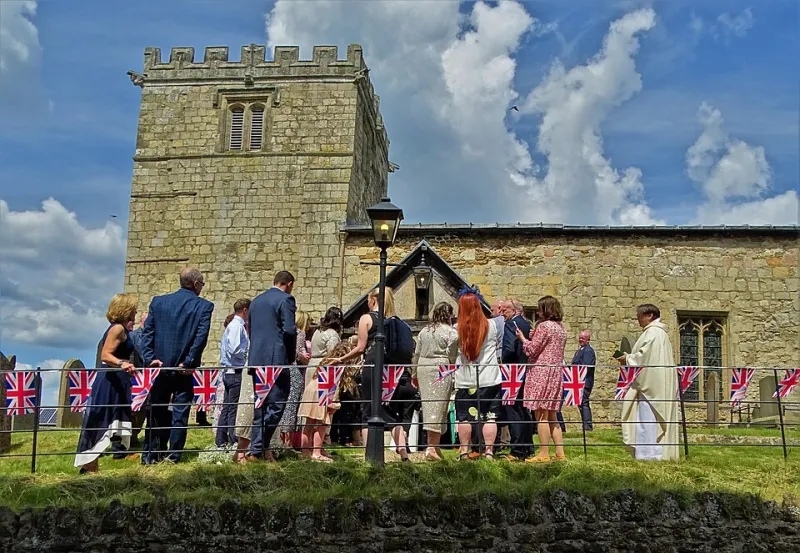
In England, filming inside a Church of England building is at the incumbent's discretion, not your venue coordinator's. Most vicars are relaxed and a few are not, and the ones who aren't usually have good reasons. Expect some to charge a fee, some to ask your filmmaker to sign an agreement, and some to specify where a camera may and may not stand. Plenty will ask that nobody films the signing of the registers themselves, which is why you'll often see a staged re-sign afterwards for the photos.
Church of Scotland is similar in spirit: the minister's say-so, arranged early. Catholic churches vary enormously parish to parish. Free churches are usually the least bothered.
Register offices are a different beast entirely. In England and Wales the rules are set by the local authority, and they range from warmly permissive to a flat no. Some councils charge for the privilege. Some allow a single discreet camera and nothing more. Get the answer in writing, because a well-meaning guest with a phone can undo a permission you spent three weeks securing.
One quirk worth knowing: humanist ceremonies have no legal standing in England and Wales, so many couples do a quiet register office appointment earlier in the week and treat the celebrant-led ceremony as the emotional main event. In Scotland, humanist ceremonies are legally binding, and celebrants there are generally delighted to be filmed. Either way, ask the celebrant directly — they're the ones who'll help you place a microphone.
Where the microphones actually go
If you only get one audio decision right, make it the vows. A lavalier clipped inside a jacket lapel beats a camera-mounted mic every time, because it hears what you're saying rather than what the room is doing. A second lav on the celebrant or registrar covers the introductions, the legal wording and the bits you'll have forgotten by the reception.
Readings are the sneaky one. Readers project to the back of the room but often turn away from the lectern mic, or hold the paper in front of it. A small recorder hidden in a hymn book or taped under the lectern shelf catches the whole thing without anyone noticing it's there. And keep one mic purely for atmosphere — congregation singing, the shuffle of everyone standing, the collective intake of breath when the doors open. That ambient layer is what stops a film sounding like a studio recording of a wedding rather than an actual wedding.
If your filmmaker uses radio mics, check they're running on licence-free or properly licensed UK frequencies. Boring, yes. But a licensing slip on the day is the sort of thing that turns a perfect vow into static.
Two angles beat five
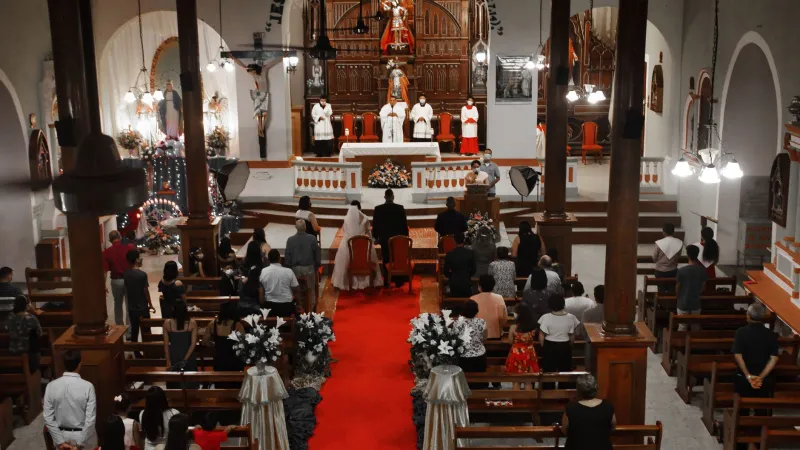
A common mistake is over-covering. A camera at the back on a long lens for the walk up the aisle. A second at the front-side, angled across the couple, for faces and hand-holding. A wide, locked off, high at the back, capturing the whole shape of the room. That's usually plenty.
What we don't do is wander. A videographer crossing the aisle mid-ceremony pulls every eye in the building with them. The best ceremony coverage is practically static — small, quiet movements from fixed positions, letting the room do the work.
If you're in a small church with a narrow aisle, the long lens from the back is your friend, and the front camera can sit where a choir stall or a pillar gives it cover. In a bright register office room with a low ceiling, forget the wide shot pulling its weight and get the second camera tight on your faces instead.
Briefing the people who love you
Don't tell your guests to ignore the camera. Nobody can ignore a thing they've been told to ignore. Tell them, if you must, that they'll forget it's there within five minutes — which is true — and ask them to look at you rather than down the barrel.
For parents and anyone doing a reading, a two-minute conversation a week beforehand does more than a page of instructions: look at the couple, not the lens; walk at half the speed you think you should; if you fluff a line, keep going, we'll cover it. And if there's a relative who genuinely doesn't want to be filmed, tell us. We'll keep them out of shot. That's a promise we'd rather make in advance than break afterwards.
The bits you can't stage
The most affecting frame in most ceremony films isn't the kiss. It's the half-second before it, when the registrar says the words and one of you laughs out of sheer relief. It's your mum's hand gripping the pew in front. It's the flower girl losing interest entirely and sitting down on the aisle carpet.
None of that is a performance. Which is exactly why it's worth filming.