Let It Rain: Why a Wet Wedding Day Makes a Warmer Film
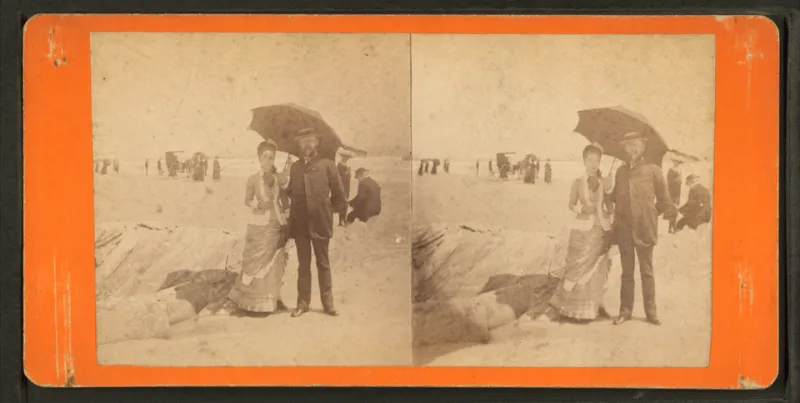
Photo: Whittemore, A. J. -- Photographer, Public domain, via Wikimedia Commons
The forecast is not the enemy
British weddings come with a built-in gamble. You can plan a marquee in July and still end up watching the rain come in sideways. But here's the thing: a wet wedding day isn't a ruined wedding day. It's a different one. And from a filming point of view, it can be richer.
Rain changes the texture of a day. It brings people closer together, literally. It gives you umbrellas, wet pavements, steamy windows, and the kind of soft light that makes everyone look like they're in a period drama. It also gives you permission to slow down. When the heavens open, the schedule goes out the window and people start looking after each other. That's where the emotion lives.
Light: soft, silver and forgiving
Overcast skies are a wedding filmmaker's friend. Harsh sun creates squints and shadows; rain clouds create a giant softbox in the sky. Skin tones even out. Details in white dresses hold. Church windows glow without blowing out.
We use that. If the ceremony is indoors, we'll position ourselves near the biggest window and let the grey light do the work. If the couple wants portraits outside, we'll look for shelter with a view: a church porch, a marquee entrance, a doorway with a bit of depth. We might use a reflector to bounce light back into faces, but often the cloud cover is enough.
The one thing we avoid is fighting the weather with flash. A burst of flash in a rainy churchyard can look like a paparazzi shot. We'd rather lean into the mood: slightly darker, slightly softer, more atmospheric. A bit of grain is not a problem. It's character.
Sound: the rain is part of the story
Audio is where rainy weddings get interesting. Rain on a marquee roof sounds like applause. Rain on a car window sounds like a secret. Rain on an umbrella sounds like company. We don't try to remove all of it.
We use lavalier microphones on the couple and often on the officiant, so the vows stay clear even when the weather turns. We'll also record ambient sound separately: the drumming on canvas, the squelch of wellies, the laughter of guests running for cover. In the edit, those sounds become part of the film's rhythm.
The practical bit: if you're getting married in a church with a tin roof during a downpour, tell us. We'll mic you properly and make sure the celebrant knows to speak up. If you're in a marquee, we'll be careful about where we place mics so the rain doesn't drown out the speeches. A little planning means the rain becomes a layer, not a barrier.
Keeping kit (and people) dry
Cameras don't love water. We bring rain covers, dry bags, lens cloths and spare batteries. We also bring a change of clothes for ourselves, because there's nothing worse than a shivering filmmaker. But the bigger job is looking after you.
We'll always have a clear umbrella or two in the car. They photograph well and they keep the couple dry without blocking the shot. We'll suggest wellies or sturdy shoes for outdoor photos, and a spare pair of flats for later. We'll scout indoor backup locations before the day: a pub with good windows, a hotel lobby with a fireplace, a church hall with character.
If the forecast is truly terrible, we'll talk through a wet-weather plan in advance. That might mean moving portraits earlier, swapping an outdoor first look for an indoor one, or building in extra time for drying off. The plan isn't about avoiding rain. It's about making sure the rain doesn't dictate the day.
Plan for wet, not against it
The couples who cope best with bad weather are the ones who decide in advance to enjoy it. They buy the umbrella. They warn the guests. They choose shoes they can walk in. They let the day be what it is.
One couple I filmed in the Peak District had a full-on downpour during their outdoor ceremony. The registrars moved everyone into a barn at the last minute, and the couple said their vows while rain hammered the roof and someone's dog shook itself dry in the corner. The footage is some of the most alive I've ever shot. You can see the relief, the laughter, the 'we're actually doing this' look on their faces.
Another wedding in a London town hall had a classic British drizzle. The couple walked out under a shared umbrella, and the guests formed a soggy guard of honour. The bride's veil stuck to her face. The groom kept apologising to everyone. It was perfect. Not because it looked like a magazine spread, but because it looked like them.
The downpour moments couples remember
Ask couples what they remember from a rainy wedding and they rarely mention the weather being a problem. They remember huddling together. They remember a friend's speech being interrupted by thunder. They remember the smell of wet coats in the marquee and the way the dance floor steamed up.
Those are the details a film can hold. A sunny day gives you golden hour and long shadows. A rainy day gives you intimacy, improvisation, and the sense that you're all in it together. Both are good. But there's something very British about a wedding that survives the weather and comes out warmer on the other side.
So if the forecast says rain, don't panic. Bring an umbrella, wear sensible shoes, and let us film the feeling. The puddles might even make the final cut.