Pocketfuls of Joy: Filming a Confetti Exit That Feels Like a Celebration, Not a Stunt
The bit everyone remembers (and nobody rehearses)
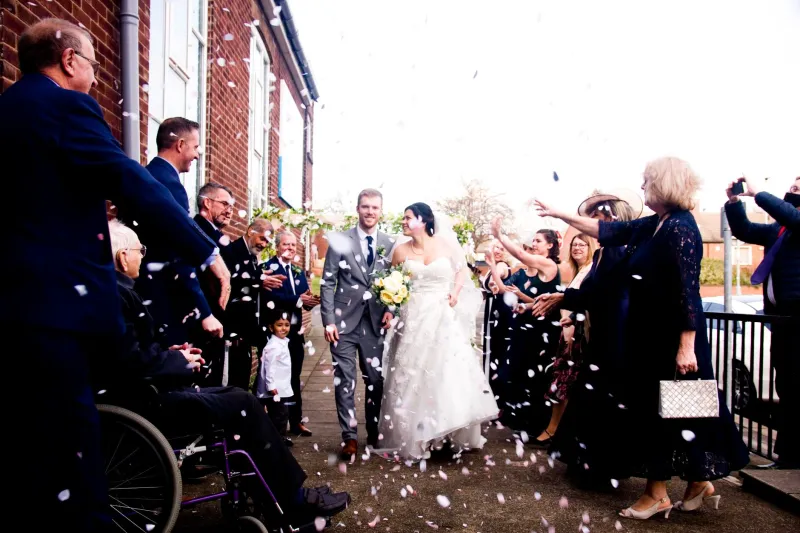
Confetti is the release valve of a wedding day. After the vows, the rings and the slightly-too-long reading, someone hands out cones and suddenly everyone is eight years old again. It lasts maybe eight seconds. On camera, those eight seconds can look like a scrum of shoulders and a blizzard of paper, or like the best frame of the whole day. The difference is rarely luck. It is timing, a bit of geography, and accepting that the mess is the point.
Start with the venue, not the Pinterest board
Before you buy a bumper box of paper shapes, check what your venue actually allows. UK venues have rules, and they are not all the same. Many churches allow only dry, biodegradable confetti outside the porch. Some National Trust and council-owned sites ban it outright or restrict it to dried petals. Marquees and hotels may ask for paper rather than rice because rice is slippery and stubborn. Confetti canons are often a separate conversation, especially indoors. Ask your coordinator or registrar what has worked before, and where they prefer the throw to happen. If the venue says petals only, lean in. Dried delphinium and rose petals look lovely on film and behave better in wind than you might think.
Pick the spot for the light, then for the shot
The best confetti exits are not always at the main door. In summer, a west-facing courtyard at seven in the evening can turn a handful of paper into something almost cinematic. In winter, a porch with open doors gives you shelter and a dark background that makes the confetti pop. We look for a background with depth: a hedge, a stone wall, a line of trees, even a parked tractor. Anything that gives the eye somewhere to travel. Avoid a flat white wall directly behind you if you can. Backlight is magic because it catches the paper and petals as they fall. If the sun is low, we may shoot into it and let faces fall slightly dark, then lift them in the edit. On a grey day, a simple flash or bounce gives the confetti a little sparkle. We would rather have texture and movement than a perfectly even exposure.
Put people where they can throw, not crowd
The classic mistake is a tight bunch of guests all trying to throw from the same square metre. We like two loose lines, maybe three metres apart, with a clear runway. Guests can see you, throw upward and outward, and not block each other. If your venue has a narrow doorway, we might ask half the guests to wait at the far end and throw from there. It sounds fussy; it takes ninety seconds to set up. We will often nominate two friends as confetti captains. They are not directors. They just hand out cones and remind people to throw high rather than directly at faces.
The camera has to be in the right place
For a confetti exit we usually shoot with two cameras if we can. One is ahead of you, low and wide, catching the two of you coming through the shower with the crowd on either side. The other is tighter, off to one side, looking for faces, hands, a grandmother laughing, a flower girl with a fistful of petals. The wide shot gives the story; the tight shot gives the feeling. We avoid standing in the middle of the runway. You need somewhere to walk, and guests need somewhere to aim. If we are using a gimbal, we might walk backwards slowly; if not, we pick a fixed spot and let you move through the frame. Either way, we are looking for the moment just before the first handful lands. That is where the anticipation lives.
Keep it spontaneous, but give it a shape
A confetti exit can feel staged if someone shouts ready, set, throw like a school sports day. It can feel chaotic if nobody knows where to stand. The middle ground is a loose plan: your coordinator or a friend gathers guests, we get into position, you have a last kiss in the doorway, and then you walk. No countdown necessarily. A simple here they come is enough. The first throw is the cue. After that, let it happen. Some of the best footage is the second wave, when guests realise they can throw again and the air fills up. We will keep rolling for a few seconds after you have passed. That is often where the unguarded laughter is.
Wind, rain and the great British forecast
Wind is the enemy of a neat confetti shot and the friend of a lively one. Paper confetti in a breeze can blow straight back into faces, so we watch the direction and position accordingly. Dried petals are heavier and fall more predictably. If it is raining, a covered porch or an umbrella line can work beautifully; the confetti sticks to wet stone and the light goes silvery. If it is blowing a gale, we might suggest a shorter exit and a smaller throw, or move to a sheltered spot. We have filmed confetti in drizzle, in bright sun, and once in a hailstorm that arrived without warning. That last one was not ideal, but the couple laughed, and the film is better for it.
What we do with it afterwards
In the edit, the confetti exit is rarely one continuous shot. We might use the wide as the spine, then cut to a tight hand throwing, a face mid-laugh, a shoe stepping through paper. We will often slow a fraction just as the confetti leaves the hands, not to make it syrupy, but to let the eye catch the colour. Sound matters too: the rustle of paper, the cheers, the sudden quiet when you reach the end of the line. That little drop in noise is often the moment we use to cut back to the two of you, alone for a second, before the party starts.
The mess is the memory
You do not need a perfect confetti shot. You need one that feels like your wedding: your friends, your venue, your weather, your slightly chaotic plan. Paper in your hair and petals in your shoes are not problems to be solved. They are the evidence. If the wind takes it sideways and your aunt throws a handful directly at the videographer, so be it. We will be laughing too. That is the shot.