One Minute, Full Heart: Editing a Wedding Clip That Survives the Scroll
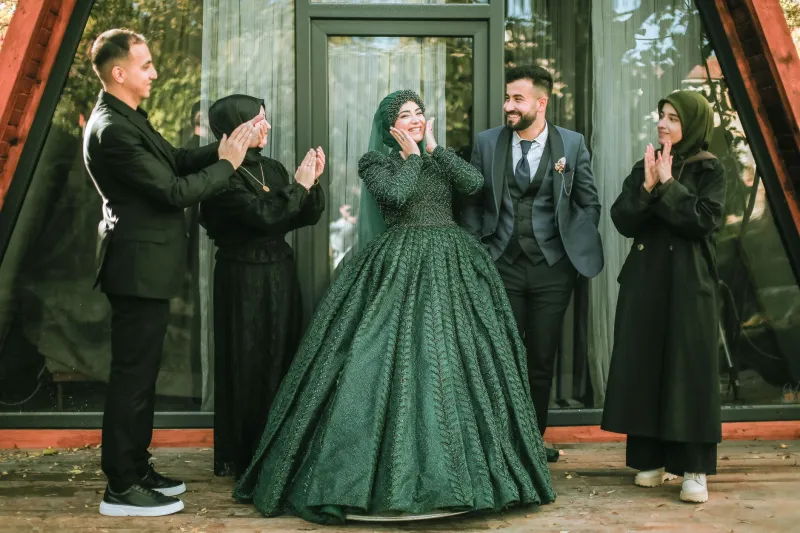
There is a particular look that comes over a couple when they ask whether their wedding film can be made into something for the group chat. It is half excitement, half apology. They want a version they can send to the people who were there, or the ones who could not make it, without asking anyone to set aside nine minutes on a Sunday evening. Fair enough. A sixty-second clip is not a lesser version of a wedding film. It is a different animal, with different instincts, and it deserves to be cut with the same care.
Two edits, two jobs
The long film is built to breathe. It can wait for the laugh to land, let a speech wander into the good bit, and hold on a parent's face for three seconds longer than a social platform would ever allow. The short edit is built to point. It says: look at this face, listen to this line, notice the way the room reacted. It is not a summary and it is not a trailer. It is closer to a postcard — a small, specific thing that carries the weather of the day.
The mistake is to treat the minute as a compressed version of the full film. If you try to squeeze in the ceremony, the speeches, the first dance and the venue, you get a montage that moves like a shopping list. The minute should feel chosen, not reduced.
What survives the jump to a phone screen
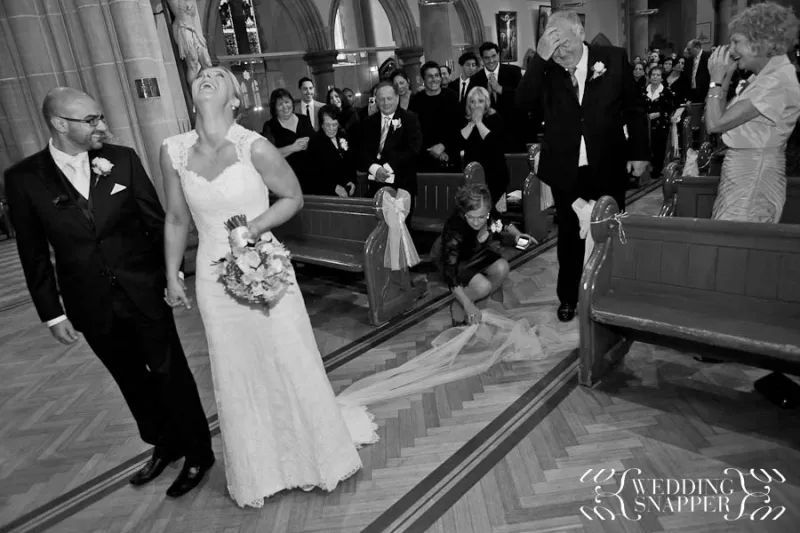
Phone screens are small, often watched on a train, frequently with the sound off for the first few seconds. That changes what works. Faces survive. Hands survive. A single line of speech survives. Movement survives — a twirl, a confetti throw, a room rising to its feet. What tends to vanish is context. A wide shot of a beautiful barn means less if the viewer cannot tell who is in it. A long establishing drone shot is lovely in the full film and almost weightless in a minute.
Sound is the real secret. A clip with one clear piece of natural audio — a vow line, a cheer, a speech punchline, a friend's laugh — will hold attention far better than a music-only edit. Add captions if the clip will be watched on mute, which it will. Keep them simple and legible. No need to caption every sigh; just the lines that carry the story.
A useful test: watch the minute on your phone with the sound off. Does it still make sense? Now watch it with sound. Does it make you feel something? If the answer to the second question is yes, you are close.
What needs the full film to work
The aisle walk usually needs room. Not because it is slow, but because the feeling is in the anticipation — the few metres before the doors open, the breath, the glance at a parent. In a sixty-second clip you can use a fragment of it, but you cannot recreate the build. The same is true of speeches. A single line can be brilliant in a short edit, but the joke that depends on two minutes of setup belongs in the long film. Vows need space to be vows rather than soundbites.
This is not a reason to leave those moments out of the short clip. It is a reason not to force them to do a job they cannot do. Use the fragment as a doorway. The full film is the room behind it.
A rough recipe, not a rule
A minute does not need to be chronological. It needs a shape. One workable shape is: a face, a line, a reaction, a movement, a burst of celebration, a final look. That might mean five seconds of a nervous grin, ten seconds of a vow or speech line, a few seconds of the room laughing, a confetti throw, a dancefloor moment, and a last frame of the two of you somewhere quiet. It is not a formula. It is a way of making sure the minute has both feeling and forward motion.
Try to include one moment from before the ceremony, one from the ceremony itself, and one from the hours afterwards. That gives the clip a beginning, a middle and an end without pretending to be a full account. Keep the natural sound higher than you think. Let the music support rather than smother. And resist the urge to speed everything up. A little slowness in a short edit can feel like confidence.
Sharing it generously
A short wedding clip should feel like a gift, not a teaser. Send the file itself where you can, rather than only a link that expires or asks people to sign up. Add a line — even just: thought you would like this one. If you are sharing publicly, check who is in the frame, especially children and anyone who prefers not to be online. A private group chat is one thing; a public feed is another.
It also helps to tell people what they are watching. A sixty-second clip is not the film. It is a small window. If someone loves it, they can ask for the longer version. If they do not watch it, that is fine too. The point is not to chase views. The point is to let the feeling travel a little further than the room it happened in.
At Ceremony, we think of the short edit as a companion piece: not the whole story, but a way of keeping the day close. A minute done properly can still make a friend stop scrolling, smile, and text back the only thing that matters: oh, that is so you.