Holy Ground, Quiet Cameras: Filming a Church Wedding Without Turning It Into a Film Set
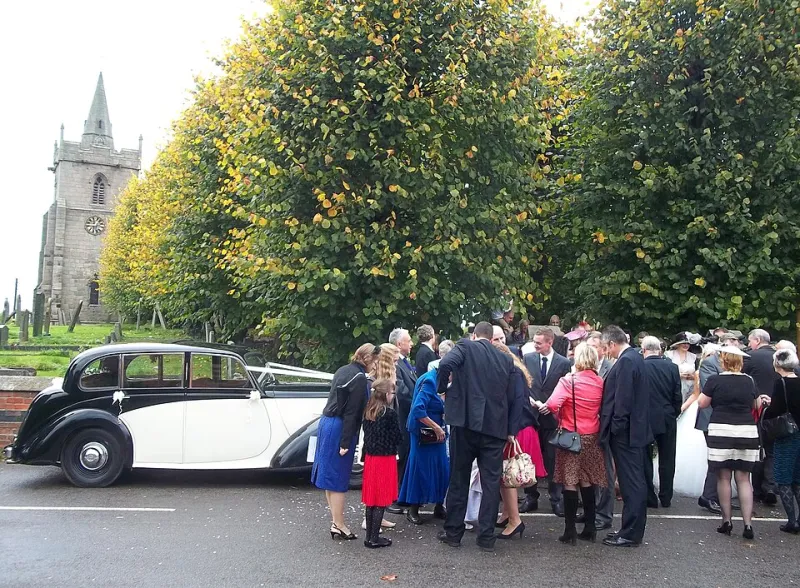
Photo: Jonathan Clitheroe , CC BY-SA 2.0, via Wikimedia Commons
A church wedding has a different tempo from a registry office or a marquee. The light is older. The sound behaves differently. There is a font near the door, a pillar where you least want one, and a vicar who has seen every camera trick going and is not especially impressed by any of them. That is not a problem. It is the texture of the day.
The trick is to film it with respect. Not timidly, and not as though the church is a difficult location to be endured. A church is not a set. It is a room full of history, habit and people who know exactly how it works. Your wedding film will be warmer and more honest if the cameras understand that from the start.
Start with the person in charge, not the shot list
Before anyone talks about lenses, angles or where the groom will stand, talk to the vicar, priest or minister. They are the gatekeeper for the building, the ceremony and the mood. Ask what they are comfortable with, what they would rather avoid, and whether the church has its own rules about photography and video.
Do this early. Not the week before, when everyone is busy and the answer is more likely to be a tired no. A short conversation months out gives you room to adapt. It also gives the vicar a chance to say things like 'please don't come behind the altar' or 'the sound desk is not a climbing frame' before those things become an awkward conversation on the day.
Useful questions include: where can the camera operator stand? Is a second camera allowed at the back? Can we use a small microphone on a stand, or would the church prefer its own sound system? Are there parts of the ceremony that should not be filmed? What is the policy on drones outside? Who unlocks the building, and when can we get in to look around?
If the church is part of a larger parish or denomination with its own paperwork, the vicar will know. Ask whether the parish, PCC or diocese needs anything in writing. It is deeply unglamorous, but a polite email in advance is worth more than a heroic workaround on the morning.
Where cameras can and cannot go
Every church is different, but the same principles tend to hold. The back of the church is usually the safest home for a main camera. It gives you the aisle, the couple, the altar and the congregation without putting a lens in anyone's eyeline. A second camera can often sit to one side, nearer the front, if the vicar is happy and if it does not block a pew or a side aisle.
The altar is not a camera position. Nor is the pulpit, the choir stalls or anywhere that turns the ceremony into an obstacle course. If you are not sure, ask. 'Can I stand here?' is a perfectly good sentence. It is better than discovering halfway through the vows that you are standing in the one spot the vicar needs to walk through.
Think about the congregation too. A camera that keeps popping up in front of guests is not invisible, however small it is. People notice. They adjust their posture. They stop crying properly because they are wondering whether they are in shot. A fixed, discreet setup often gives you more real reaction than a roaming operator ever will.
The font, the pillar and the foreground problem
Ah, the font. That beautiful, ancient, immovable object sitting exactly where you wanted a clean view down the aisle. It is a classic church-wedding puzzle. You can fight it, or you can use it.
A baptismal font in the foreground can be a gift. It tells you where you are. It frames the entrance. It gives the opening shot a sense of place that no drone can manufacture. The mistake is trying to erase it. If the couple walk past the font and you want a clear view of their faces, position the camera slightly to one side rather than directly behind it. If the font still blocks part of the frame, let it. A partial view through the architecture can feel more intimate than a perfect, airless composition.
The same goes for pillars, pew ends, flower arrangements and that one enormous Christmas tree that appears every December. Churches are not designed around camera lines. They are designed around worship, community and centuries of use. Work with the shapes in the room. Sometimes the best shot of the vows is a glimpse between two pillars, with the congregation's shoulders soft in the foreground.
Light that has been there for centuries
Ancient churches can be dark. Really dark. Stained glass does strange, beautiful things to colour, and a grey November afternoon can turn the nave into a cave. This is not the moment to blast the room with artificial light and make it look like a conference centre.
Talk to the vicar about what is allowed. Many churches are fine with a small, discreet light if it is necessary; others are not. If you can, lean into what the building gives you. A slower lens, a higher ISO and a willingness to let some shadows stay shadows will usually look more truthful than a brightly lit ceremony that feels nothing like the place.
Candles help. So does the natural fall of light from a side window. The moments around the vows, the readings and the signing of the register often look best when you let the church be a church rather than trying to correct it into a studio.
The drone question
A drone can be lovely. It can show the churchyard, the village, the walk from the lychgate, the scale of the day. It cannot show the vicar's face when they first see the couple. It cannot catch the hymn that everyone belts out slightly too enthusiastically. It cannot replace being in the room.
Drones also come with rules. In the UK, there are legal requirements around flying, and churches may have their own policies about taking off or landing on their land. Always ask the vicar and whoever manages the grounds. Do not assume that because the sky is open, the answer is yes. And do not let a drone become the story. If the wind is up, the permissions are unclear or the church would rather you didn't, let it go. A quiet camera inside will give you more of the day than a stressful flight outside.
Why quiet often wins
A church wedding is full of small, unplanned moments. A groom checking his cuff. A grandmother finding the right hymn. A child whispering a bit too loudly. The vicar smiling at the couple just before the blessing. These are not shots you can choreograph. They happen because nobody is being directed.
That is the argument for a calm setup. Fewer moves, fewer people, fewer cables. A camera that sits still and listens. The result may not look like a trailer. It will look like the day.
So ask the questions, respect the answers, and let the building do some of the work. The vicar, the font and the ancient light are not obstacles to your wedding film. They are part of the reason it will feel like this wedding, in this place, on this day.