The Family Portrait Relay: Filming Group Photos Without Losing the Plot
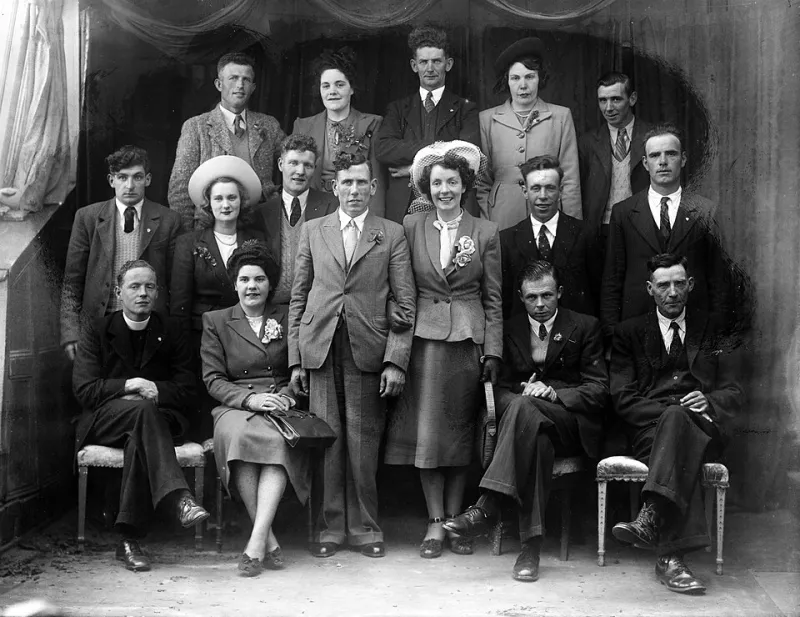
Photo: National Library of Ireland on The Commons, No restrictions, via Wikimedia Commons
Every wedding has a moment when someone with a clipboard voice says, “Right, can we have the immediate family?” and the room collectively braces. Group photos are necessary, slightly chaotic and famously capable of eating forty minutes before anyone has had a drink. But they don’t have to feel like a school-assembly shuffle. Filmed properly, the family portrait session is not a interruption in the day — it is part of the day, with its own small comedies, reunions and quiet bits of tenderness.
Start With a List That Fits Actual Humans
The fantasy shot list has thirty combinations and a neat timeline. The real one has a missing cousin, a nan who needs a chair and a brother-in-law who has vanished towards the bar. So build the list for real life. Aim for eight to twelve core combinations, not every possible permutation of aunts, uncles and plus-ones. Prioritise the people who matter most and the groupings that would genuinely be missed: grandparents, immediate families, siblings, perhaps a shot with the wedding party. If you want a big all-hands photo, put it near the start while everyone is still accounted for.
Send the list to your photographer and, if you have one, your family wrangler before the wedding. Write names, not just “Bride’s family”. “Bride’s family” is a lovely idea and a logistical fog. “Bride’s mum, dad, sister Priya, grandparents” is something a person can actually action. Build in ten minutes of slip, because there is always a trip to the car for a jacket or a toddler who has decided the gravel is more interesting than the camera.
The Wrangler Is Worth Their Weight in Confetti
The person who gathers relatives should not be the photographer, and it should certainly not be the couple. Ideally it is one calm person from each side — a cousin with a loud-enough voice and enough social capital to say, “Auntie, they need you now” without causing a diplomatic incident. Give them the list. Give them a copy of the timings. Give them permission to be gently bossy.
A good wrangler works in plain language: “Lovely, that’s done — thank you, you can grab a drink.” Release people explicitly, or they will hover in the background like extras waiting for a cue that never comes. Keep a base camp near the photo spot so people know where to return. And if there is a chair, use it. A seated grandmother is not a compromise; she is the centre of the photograph.
Film the Handover, Not Just the Line-Up
The stills photographer needs the combinations. The film needs the seconds around them: the aunt who straightens a collar, the cousin who arrives late and gets a cheer, the dad who mutters “is this the one where I look like a potato?” The camera should be close enough to catch those glances but far enough back not to turn the whole thing into a performance.
This is why the session should have breathing gaps. If you march from one combination to the next with military precision, you get efficient pictures and a flat film. If you allow a few seconds of shuffle — people finding each other, laughing at the height difference, a child being lifted — you get the texture that makes a wedding film rewatchable. The drone can wait. The missing cousin will probably be found near the bar. The bit where everyone spots him and waves is better than another perfect line-up.
Build in a Deadline and a Drink
A family portrait session works best when it has a visible end. Put it straight after the ceremony, before the drinks reception properly takes hold, and give it a firm thirty-five to forty minutes. Tell people the end time. If you are running over, cut combinations rather than patience. Nobody’s wedding film was improved by a bride standing in the cold for an extra twelve minutes because someone wanted a second version of the same group with slightly different uncles.
Have drinks nearby. Have a plan for coats and bags. If it rains, know where you are going before the day arrives — a marquee corner, a village hall entrance, a covered church porch. A wet scramble is not a disaster, but an unprepared wet scramble is a mood. And when the list is done, let the couple go. The best thing you can film after the final group shot is the two of them walking away, relieved and laughing, towards the rest of their day.
What We Actually Want From the Session
Your wedding film does not need to show every combination. It needs a handful of faces, a sense of who was in the room and the feeling of that particular hour: the organised chaos, the reunions, the small acts of getting people into place. The stills will hold the official record. The film should hold the warmth around it — the auntie, the drone hovering hopefully overhead, the cousin finally found, and the moment everyone stops posing and goes back to being themselves.