The Place They'd Have Stood: Filming a Wedding When Grief Comes Too
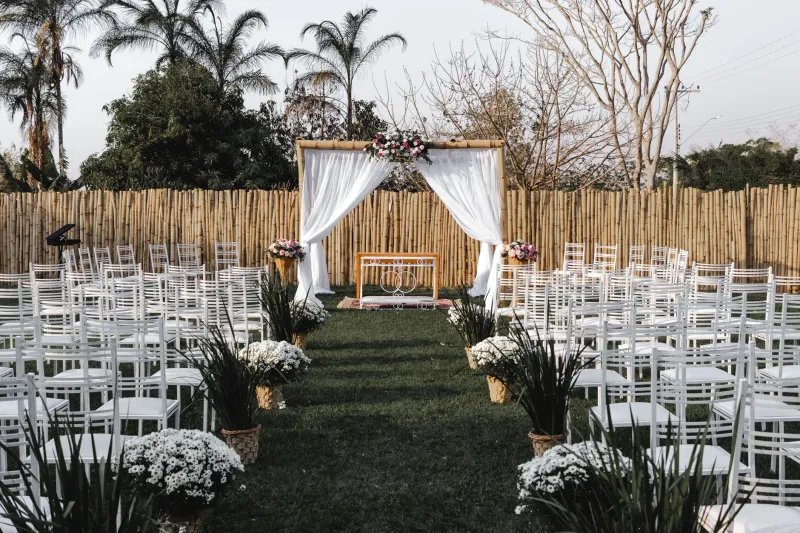
There's a particular kind of fullness to a wedding day when someone isn't there. The room is packed, the speeches are loud, the dance floor is doing its usual thing — and still, somewhere in the middle of it, there's a person-shaped space. Maybe it's a reserved chair at the front. Maybe it's a name in the order of service. Maybe it's just a feeling that arrives during the aisle walk and leaves again during the pudding.
Filming a wedding when someone is missing isn't about making a sad film. It's about making an honest one. The day isn't a grief documentary and it isn't a glossy advert for perfect happiness either. It's both things at once, which is exactly what real weddings are like.
The empty chair isn't a prop
If you're reserving a seat for someone who's died, you get to decide how visible that seat is in your film. Some couples want it framed gently at the edge of the ceremony — present, not centre stage. Others would rather it wasn't filmed at all, and that's completely fair. The seat is there for you, not for the camera.
Tell your filmmaker what the chair means before the day, not halfway through the drinks reception. A simple line in your briefing — "there's a reserved seat on the left, we'd like it acknowledged but not lingered on" — saves everyone from guessing. If you want a shot of it with a single flower on the seat, ask for that. If you'd rather the camera never goes near it, say so. Neither request is strange.
A good filmmaker will understand the difference between capturing something and exploiting it. The camera can notice a saved seat without making a meal of it. A brief, steady frame in the ceremony coverage is often enough. No slow zoom. No sad piano. Just the room as it was.
Saying their name without making it a scene
Some couples mention a missing person in their vows. Others include them in a reading, a toast, or a line in the order of service. On film, these moments can be incredibly powerful — but they need room to breathe.
If you're planning to name someone in your vows, tell your filmmaker in advance so they know to be close enough to catch the words clearly. There's nothing worse than a beautiful tribute that's half-lost under a registrar's microphone or a guest's cough. Similarly, if a parent or sibling is giving a speech and plans to raise a glass to someone who's gone, give the filmmaker a heads-up. They can make sure they're in the right place for the reaction as well as the words.
But here's the thing: you don't have to include every mention in the final film. Some couples want the tribute front and centre. Others want it acknowledged once, quietly, and then the film moves on. Both are valid. The edit should reflect how you want to remember the day, not how a stranger thinks grief should look.
The quiet toast, the worn ring, the song they loved
There are dozens of small ways to carry someone into a wedding day. A piece of their jewellery worn by the bride. A buttonhole made from their favourite flower. A song in the ceremony that nobody else would recognise. A photo in a locket. A particular brand of whisky on the bar.
These details are gold for a wedding film because they're specific. They don't announce themselves. They just sit there, quietly doing their job, and the camera can pick them up without turning them into a montage. If you want those details filmed, tell your filmmaker what they are and where they'll be. "I'm wearing my mum's ring on my right hand" is a useful sentence. So is "there's a photo of my dad on the top table, but please don't make a big thing of it."
A word of caution: don't ask your filmmaker to capture something that will upset you on the day. If seeing the empty chair filmed might knock you sideways, say so. The film can still hold the feeling without the raw footage. You're allowed to protect yourself.
What to tell your filmmaker — and what to keep private
A short, honest conversation before the wedding is worth more than a hundred creative briefs. Here's what to cover:
- Who is missing and how you'd like them acknowledged. A name, a relationship, a seat, a mention in the vows, a toast. Be specific.
- What you don't want filmed. Maybe it's the empty chair. Maybe it's a particular family member who finds the day difficult. Maybe it's the moment you have a quiet cry in the loos. You're allowed to say "not that."
- Who else needs to know. If a grandparent is going to be emotional, or a sibling is doing a reading that might wobble, let your filmmaker know so they can be discreet.
- What the film should feel like overall. Is it a celebration with a thread of remembrance? A joyful day with one honest pause? A full-on party that happens to include a toast? There's no right answer, but the tone matters.
You don't have to hand over a dossier of grief. A few sentences are enough. The best wedding filmmakers are used to holding complicated days. They won't make it weird.
Editing grief without making it maudlin
In the edit, the temptation is to lean on the sad stuff. A slow-motion shot of the empty chair. A lingering close-up of a tear. A soundtrack that tells you exactly how to feel. We try to avoid all of that.
The alternative is simpler and harder: let the day be the day. Show the room full of people who are there. Show the laughter in the speeches. Show the dance floor going daft. Then show the quiet moment — a hand on a locket, a glance at an empty seat, a raised glass — and trust it to land. Grief doesn't need help to be felt. It just needs space.
Sometimes the most moving part of a wedding film is the contrast. The bride walking up the aisle with her brother instead of her dad. The best man raising a toast to someone who'd have loved the party. The mother of the groom dancing with her son while a photo watches from the top table. Those moments aren't sad in isolation. They're full. They hold the missing person and the present joy in the same frame.
The film is for you, not for grief
A wedding film isn't a memorial. It's a record of a day when you got married — and that day happened to include someone who wasn't there. The film should feel like your wedding, not like a tribute video. If you want the missing person honoured in a particular way, say so. If you'd rather the film focused on the living, the laughing and the slightly chaotic dance floor, that's fine too.
The empty chair and the full room can both be true. A good wedding film doesn't try to resolve that. It just holds it, gently, and lets you watch it back when you're ready.