Cars, Kettles and Car Parks: Why the Hour After the Vows Belongs in Your Wedding Film
Photo: Amedeo Modigliani, Public domain, via Wikimedia Commons
Most wedding timelines look neat on paper. Ceremony at two, drinks at three, wedding breakfast at half four, speeches before pudding. Then the evening do. Tidy boxes, one after another. But the bit between the ceremony and the reception rarely gets a box of its own. It is the car ride, the dash across a wet car park, the ten minutes in a back room with a cup of tea and a plate of someone's homemade shortbread. It is also, quite often, the part of the day that makes the film feel like yours.
The hour nobody schedules
We are not talking about the big set pieces. The vows get their moment. The confetti gets its slow-motion shot. The first dance gets the song you have been arguing about since January. The in-between is different. It is not a scene. Nobody has rehearsed it, and that is exactly why it works.
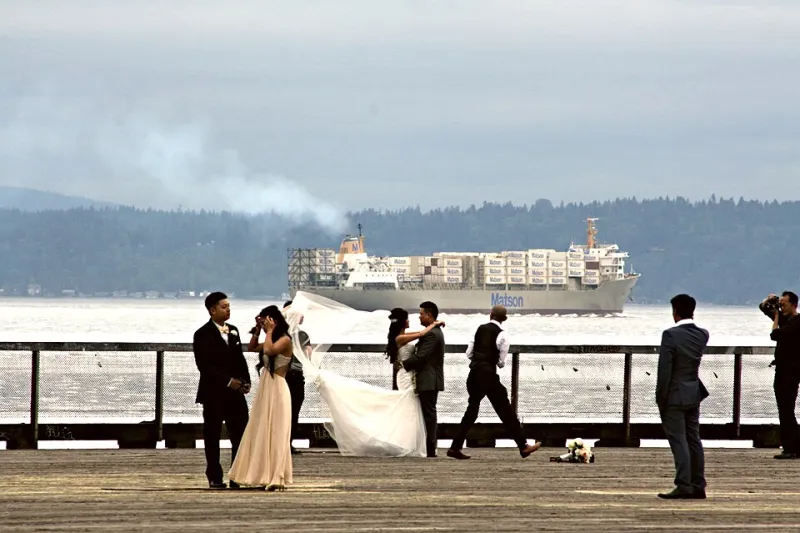
Think about what actually happens after you walk back down the aisle. There is a flurry of hugs, a register to sign, a bridesmaid hunting for a lost earring, a dad reversing the car into a hedge. Someone is holding a bouquet like it is a relay baton. You might get five minutes alone in a side room, or you might get a brisk walk through a churchyard in the drizzle while a guest tells you about their new conservatory. It is messy, ordinary and completely alive.
Why the lull is rarely a lull
On camera, these transitions are gold. People stop performing. The ceremony is over, the reception has not quite started, and everyone relaxes by about ten per cent. You get the real laughs, the quiet check-ins, the way your partner puts a hand on your back while you are both looking the other way.
We have filmed couples eating chips in the car. We have filmed a groom standing in a village hall kitchen, sleeves rolled up, helping the caterer find the corkscrew. We have filmed a bride sitting on a windowsill with her nan, neither of them saying much, both of them happy. None of that was planned. All of it earned its place in the edit.
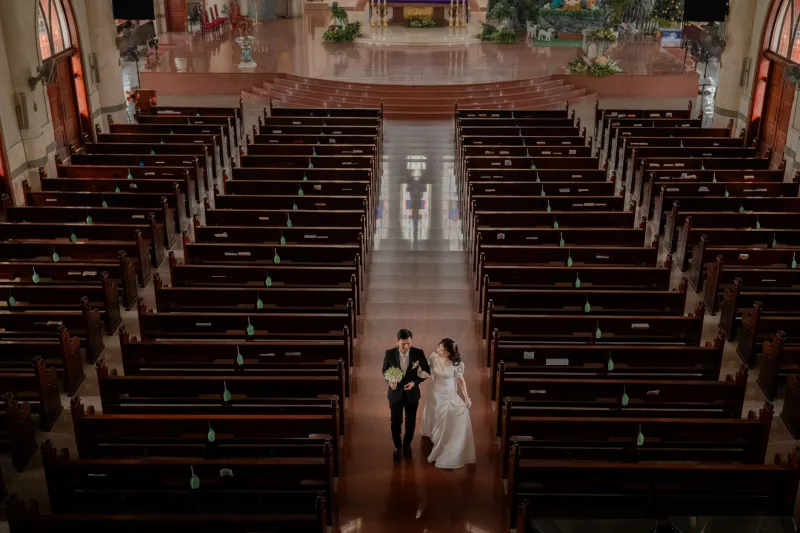
The in-between also gives the film its sense of travel. A wedding day is not just one room. It is a journey from one place to another, and the journey tells us something. The nervous car ride to the ceremony has a different energy from the relieved car ride away from it. Same car, same people, completely different film.
Leave a little breathing room
Our main piece of advice is simple: build a buffer into your timings. Not a huge, empty void. Just twenty or thirty minutes between the ceremony ending and the reception beginning, ideally more if you are travelling between venues.
If the church is twenty minutes from the barn, do not book the drinks reception for twenty minutes after the ceremony. Give it forty. Someone will need the loo. Someone will get lost. The photographer will want a few family groups, and your uncle will keep wandering into the back of them. A little slack turns a stressed dash into a pleasant amble.
Think about where that time goes. Could you stop at a pub on the way? Could you go back to your parents' house for a cup of tea and five minutes of quiet? Is there a nice bit of countryside on the route where you could pull over for ten minutes, not for a photoshoot, just to stand still together? If you are getting married in winter, remember that daylight is precious. A late-afternoon journey might be dark, but a dark car ride with the heating on and the radio low can be just as lovely on film.
Tell your venue you might arrive a little later than the official time. Tell your drivers. Tell your photographer and, if you have one, your planner. It is not a delay. It is a design choice.
How we film it without turning it into a shoot
This is where we are careful. The in-between should not become a second portrait session. The moment someone asks you to walk back through the door again because the light was better, the honesty goes out of the window.
So we keep it light. We use small cameras. We stay at the edge of the room rather than in the middle of it. If you are travelling by car, we might ask if we can ride along or follow behind, but only if that suits you. We do not direct. We do not ask you to hold hands and look at each other. We film what is already happening: the seatbelt click, the umbrella wrestling, the way someone holds the dress train above a puddle.
Sound matters here too. The clink of a teaspoon, the car engine, the rain on a roof, a burst of laughter from the next room. Those small sounds stitch the film together. They remind you what the day actually felt like, not just what it looked like.
The car park dash is not a flaw
UK weather does not always cooperate. We have filmed more wet car park dashes than we can count. Bridesmaids holding a coat over a hairdo, a groom carrying the bride over a puddle, someone's dad shouting directions to a driver who is definitely not listening. It is easy to apologise for that sort of thing in the moment. Please do not.
Those bits are the texture of a real wedding. They are also usually the bits that make couples laugh when they watch the film back. A perfect, sunlit stroll is lovely. A windy scramble across a gravel car park with one shoe in your hand is memorable.
A cup of tea is not a wasted minute
If you can carve out ten minutes somewhere quiet, take them. A back room at the venue, a corner of a pub, your childhood kitchen. Put the kettle on. Sit down. Let your shoulders drop. We will film from a respectful distance, or we will leave you alone entirely if you would rather. Either way, that pause gives the day a heartbeat.
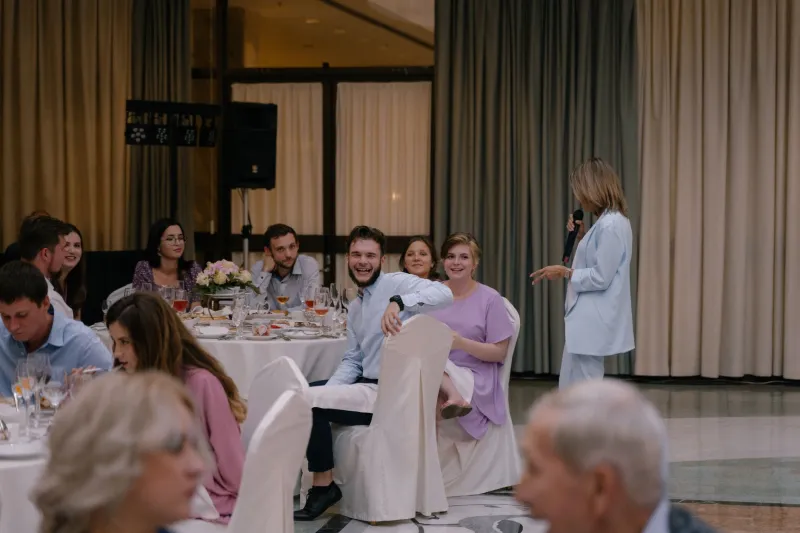
It also gives your guests a chance to settle. The drinks reception does not have to start the second you arrive. People are happy to mill about, find the loo, complain about the parking, and coo over the cake. A little unstructured time is not a hosting failure. It is a gift.
The honest hour
A wedding film is not just a highlights reel. It is the connective tissue between the big moments. The bit between the ceremony and the reception is where the day catches its breath. Build in a little room for it, tell your suppliers to expect it, and let it happen without turning it into a photoshoot. That is where the good stuff lives.