Hands That Say I Do: Filming a BSL Wedding Without Missing the Moment
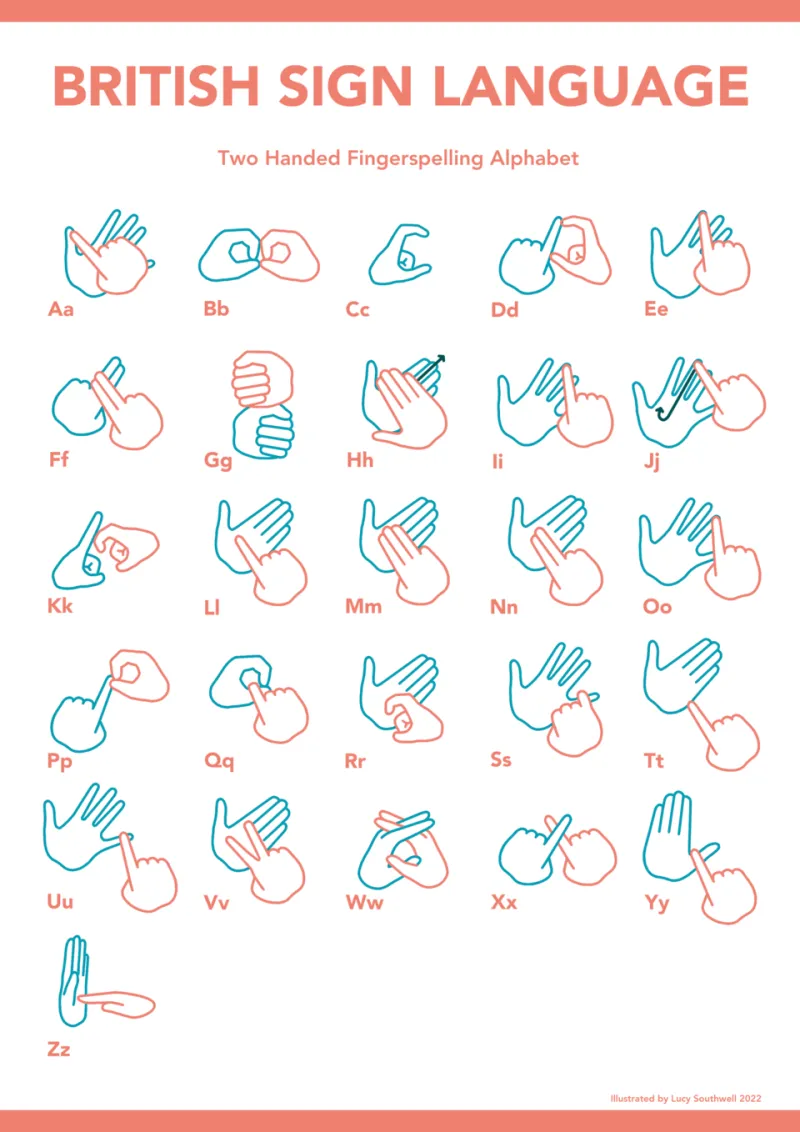
Photo: Lucy Southwell, CC BY-SA 4.0, via Wikimedia Commons
A wedding where British Sign Language is in the room is not a hearing ceremony with an interpreter bolted on. It is a different kind of event. The pace shifts. Jokes land in two places at once. Vows can arrive in hands, faces and breath before a single word is spoken aloud. If your wedding film is going to feel honest, the camera has to understand that from the first shot, not discover it in the edit.
That does not mean turning the film into a documentary about accessibility. It means filming the ceremony as it actually happens, with the people who are making it happen. Here is how we approach a BSL wedding — and what couples, venues and interpreters can do to help the footage feel like the day itself.
Start with sightlines, not shot lists
Before anyone talks about lenses, we ask where the interpreter will stand. In a church, that might be beside the altar, slightly to one side of the couple. At a register office, it could be closer to the front row, angled so deaf guests can see both the celebrant and the signing. In a marquee or a barn, it is often a case of finding the spot where the interpreter is visible without blocking the couple's exit or the registrar's table.
This is not a small detail. If the interpreter is half-hidden behind a flower arrangement, the film will be half-hidden too. We would rather move a pedestal of gypsophila than spend the edit trying to cheat a sightline. Ask the venue early. Ask the interpreter what they prefer. They have done this before, and they know where the light is bad and where the floor creaks.
The interpreter is a speaker, not a prop
There is a temptation, when filming a signed ceremony, to treat the interpreter as a helpful accessory — a pair of hands at the edge of frame. That misses the point. They are carrying the ceremony for part of the room. Their face, their posture and their timing are part of the performance. If we cut away every time they sign, the film says that the spoken word is the main event and the signing is subtitles.
So we frame them properly. Often that means a mid-shot that includes hands, face and upper body, not a tight crop on fingers. We keep one camera on the interpreter during readings, speeches and any moment when the couple or guests are likely to be watching them rather than the speaker. We do not swing the camera around like a tennis match. The aim is calm coverage, not constant motion.
Frame for hands and faces
Sign language lives in the whole body. A tight shot on a face can lose a question, a negation or a punchline. A tight shot on hands can lose the expression that gives those hands their meaning. We look for frames that hold both. That might mean a slightly wider composition than we would use for a spoken reading, or a two-shot that includes the interpreter and the person they are voicing.
Lighting matters too. Winter ceremonies, candlelit rooms and late-afternoon receptions can leave the interpreter in shadow. We would rather raise the exposure a little and keep the skin tones honest than have a beautifully moody frame where the signing is invisible. If the couple are signing their vows, we plan angles that show their hands without turning the moment into a technical exercise. No one wants a camera lens shoved between two people who are trying to say something enormous to each other.
Reactions are the ceremony
One of the quiet gifts of a BSL wedding is how visible the room becomes. Laughter travels across faces before it reaches the back row. A deaf guest might sign a reaction to a friend, or wipe their eyes while watching the interpreter deliver a line that everyone else has already heard. These are not cutaways. They are the ceremony.
We look for those moments without making a spectacle of them. Consent matters here. Some guests are happy to be filmed; others are not, and that is fair. We do not linger on anyone who is uncomfortable, and we do not use deaf guests as visual proof that the wedding was inclusive. The film should feel like a room full of people, not a checklist.
Sound, captions and the edit
The audio still matters. We record the spoken ceremony clearly, and we keep an ear out for the interpreter's voice if they are voicing for someone. But we do not assume that captions are a simple fix. Auto-generated captions are often wrong in exactly the places that matter — names, vows, a joke that depends on a particular phrase. If captions are part of the film, they need to be checked by a human, ideally someone who knows the couple and the content.
In the edit, we resist the urge to speed up or slow down signed sequences for effect. Signing is language, not texture. A slow-motion shot of hands can look lovely and mean nothing. We also avoid burying important signed vows under a swell of music. If the couple are signing their promises, let the room hear itself. Let the image breathe.
When the couple are signing
If one or both of you are deaf or use BSL, the ceremony may be led in sign, with a voice interpreter for hearing guests. That changes the camera plan in a good way. We talk to you about where you will stand, where your hands will be, and whether you want the film to show the signing in full or to mix wider shots with closer details. We do not ask you to perform for the camera. We ask you to do what you would do anyway, and we build the coverage around it.
The film should not need a disclaimer
A wedding film with BSL in it should not feel like an accessible version of the real thing. It should feel like the real thing. That means the signing is in the main film, not tucked away in a separate cut. It means the interpreter is not erased from the story. It means the reactions of deaf guests are part of the emotional weather of the day, not a box-ticking exercise.
The best compliment we can get is that the film feels like the wedding. Not like a hearing wedding with subtitles. Not like a teaching moment. Like the room you were actually in, with all the ways people said I do.