The Kitchen Table in Melbourne: Filming a Wedding for the Family Who Can't Be in the Room
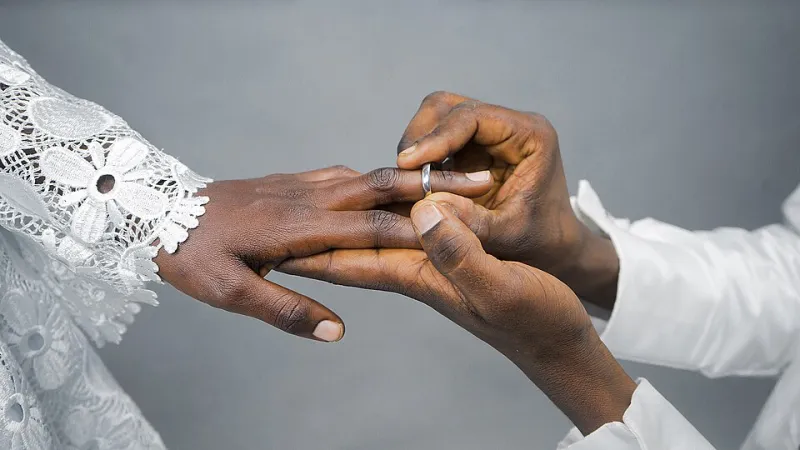
Photo: Bossphotographe, CC BY-SA 4.0, via Wikimedia Commons
There is a particular kind of guest at a British wedding who never quite arrives. They are on a kitchen table in Melbourne at six in the morning, propped against a mug. They are crowded around a laptop in a farmhouse in County Clare. They are the people who couldn't fly — because of health, money, a visa, a newborn, a passport that expired in a drawer — and they are not a footnote. They are the reason half the room keeps glancing at a phone.
Filming a wedding for those guests is not the same job as filming it for the couple. It asks different questions. What does the back of the room look like? Can you hear the reading? And does the finished film feel like an invitation, or like watching a channel you didn't mean to land on?
A livestream is not a wedding film
Let's be fair to the shaky phone on a tripod. A livestream does one job: it proves the thing is happening, right now. It is a relay, not a record. The data drops. The camera follows the bride and misses the groom's face. The microphone picks up wind, a crying toddler and someone whispering about the parking. None of that is a disaster in the moment. But it is not something anyone will watch again in a year.
A properly filmed ceremony is built for the second viewing. It has a fixed wide shot, clean audio and a cut that respects the pace of the day. If you have relatives who can't travel, the difference between a livestream and a film is the difference between a phone call and a letter. Both are welcome. Only one gets kept.
The wide shot is the seat at the back
When we film a ceremony for remote family, the most important camera is often the least dramatic one: a wide, steady shot from the back of the room. Both sides of the aisle. The whole arch or the whole registry office desk. The guests in their coats. The child swinging their legs on a chair. The grandmother's face during the second reading.
That shot does something a close-up can't. It lets someone in another time zone look around the room and find the people they know. It gives them the geography of the day. They can see where they would have stood.
We keep that camera locked off. No zooming, no hunting for reactions. It stays where a guest would sit — at the back, with a clear view. Couples sometimes worry it will look boring. It doesn't. It looks like being there.
Sound is the thing that travels
A remote guest can forgive a slightly soft focus. They cannot forgive not hearing the vows. Sound is most of the job. We use a lavalier on the celebrant or vicar, a feed from the church PA where there is one, and an ambient microphone near the front to catch the room. If the venue has a hearing loop or a sound desk, we ask about it before the day rather than during the processional.
We also caption the family cut. Not because it's an accessibility afterthought, but because a lot of people watching from abroad are watching on a laptop in a noisy kitchen, or with the sound down so they don't wake the baby. Clear audio and captions are a kindness. They also make the film easier to rewatch.
A separate cut, not a broadcast
This is the part that matters most. We don't try to make the wedding film work as live television. We make two things: the film the couple commissioned, and a family-abroad cut that is shorter, warmer and built for a specific audience.
The family cut usually runs fifteen to twenty minutes. It includes the processional, the vows, the rings, the readings, and a few seconds of the room reacting. We might add a short message from the couple filmed that morning — a two-minute hello, not a speech. We keep the sound clean and the edit simple. No commentary, no live switching, no on-screen graphics.
Then we send it as a file, not a link that expires. A downloadable film can be passed around a kitchen table, put on a television, or watched again on a Sunday afternoon. That's the point. It's not a broadcast. It's a seat.
Practical bits worth sorting before the day
Ask the venue about wifi and signal, but don't rely on either. A village hall in the Peak District is not a broadcasting studio. If a relative is determined to watch live, nominate one sensible cousin to hold a phone on mute in the corner — and tell them to keep it out of the aisle.
Tell the celebrant or vicar that family are watching from abroad. Most are delighted, and some will happily slow down for the readings. Check whether anyone reading has a preference about being filmed; it's their words, after all. And if there's a hymn, print the words in the order of service — remote guests like to follow along.
What we don't do
We don't turn a wedding into a broadcast. We don't put a camera in the middle of the aisle. We don't ask the couple to wave at a lens. And we don't treat the family abroad as an audience to be managed. They are guests. The film should make them feel like they were at the back of the room, not watching a channel.
Because the truth is, the people who couldn't fly are often the ones who will watch the film most. They will watch it on a wet Tuesday in February. They will watch it with the sound up. And they will notice the things a livestream never catches: the way the room goes quiet, the aunt who cries in the third row, the moment the couple turn to each other before the vows. That's what a seat at the back is for.