Everyone Fits in the Room: The Quiet Magic of a Village Hall Wedding Film
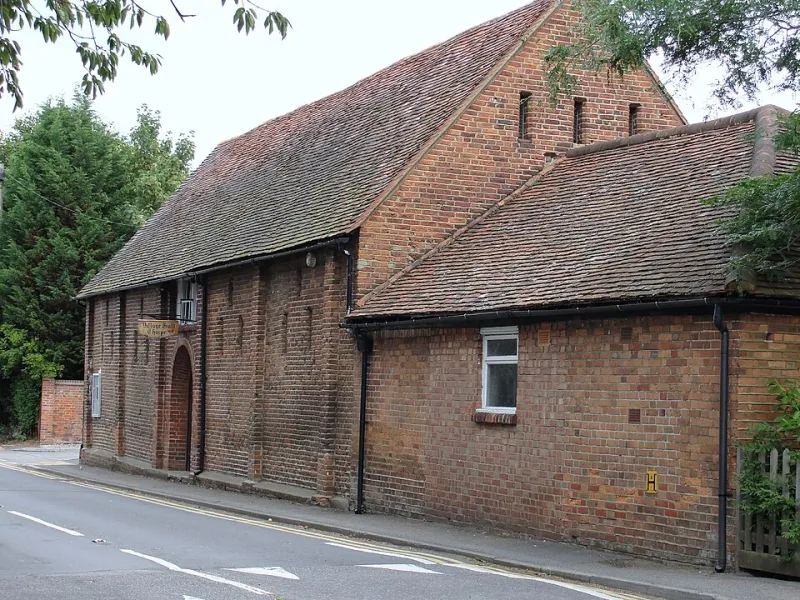
Photo: Maxwell Hamilton, CC BY-SA 3.0, via Wikimedia Commons
There’s a sound a village hall makes when it’s full. Not a grand acoustic swell — more a layered hum of chairs scraping, a tea urn ticking over, someone’s uncle laughing two beats too late at his own joke. It’s not the sound of a hotel ballroom. It’s better.
Village halls and community centres often get talked about as the sensible option: affordable, local, flexible. All true. But when we film a wedding in one, the room rarely feels like a compromise. It feels like the point. Low ceilings, borrowed lighting and trestle tables pushed close together don’t shrink the day. They pull everyone into it.
The room isn’t the limitation
A big venue can give you space, but space can also give you distance. In a hall, the dance floor is never far from the cake table, the bar is a trestle table with a honesty box, and the speeches happen under a strip light someone has tried to soften with a length of net curtain. That’s not a problem to solve. It’s the texture of the day.
Our approach is not to make a village hall look like a country house. The film should feel like the room felt: warm, busy, a bit improvised, full of people who know each other. If we started hiding the kitchen hatch or pretending the stage wasn’t there, we’d be editing out the very thing that made the wedding yours.
Filming a room that’s already full
A packed hall asks for a different kind of camera work. We spend the first hour finding corners and sightlines — the spot by the fire door where the light falls across the top table, the gap between the noticeboard and the cloakroom where we can stand without becoming part of the furniture. Wide shots matter more than ever, because the story is the whole room, not just the couple.
We don’t ask anyone to clear a space so we can get a “clean" shot. A clean shot in a village hall usually looks like a waiting room. We’d rather have the pushchair in the corner and the stack of spare chairs by the stage. Those things say something. They say this is a real place, on a real day, with real people in it.
The homemade details are the story
Bunting strung slightly crooked. Jam jars with names on them. A cake made by an aunt and delivered in a Tupperware box. A handwritten sign pointing to the toilets. These aren’t decorations to get out of the way before the “proper" photos. They’re the fingerprints of the wedding.
We film them the way we’d film a family photograph album — with a bit of care, but without making a fuss. A slow pan across the buffet table can say more about the couple than a posed shot by a fountain. The tea urn, frankly, deserves a supporting credit.
Speeches when the PA is borrowed and the room is noisy
Sound in a village hall is its own beast. Hard walls, low ceiling, a microphone that might have come from the local scout hut. But a noisy room isn’t a disaster. It’s the sound of people being present.
We mic the speaker when we can, and we always record the room. That means the laughter lands where it should, and the clink of glasses doesn’t get scrubbed away in the edit. We don’t try to make a packed hall sound like a studio. We try to make it sound like a room full of people who came to celebrate.
Three generations in one frame
One of the quiet joys of filming a village hall wedding is how many ages end up in the same shot. A grandmother adjusting a granddaughter’s hair. A toddler running a lap of the dance floor. A neighbour from the parish council having a quiet word with the groom. These moments don’t need staging. They just need a camera that’s patient enough to notice them.
We keep a light footprint on purpose. The more we move around like we’re directing a scene, the less the room behaves like itself. In a hall, people are close enough to see you. The best compliment we can get is that they forgot we were filming.
What we don’t do
We don’t over-light a village hall until it looks like a function suite. We don’t colour-grade the warmth out of it. We don’t empty the room for a romantic sunset shot that the couple never actually had. The film should be true to the day, not a version of it that looks better on a mood board.
Why these films last
Village hall weddings tend to produce films that feel like home movies in the best sense — specific, human and full of the people who made the day happen. The venue was never the thing to apologise for. It was the thing that held everyone together.
When the couple watch it back in years to come, they won’t remember the ceiling height. They’ll remember who was in the room. And in a village hall, everyone fits.