Before the Fizz Goes Flat: Why Grandparents Belong at the Start of Your Wedding Film
Photo: elderly grandparents chatting over tea at a wedding reception natural light documentary style, via i.pinimg.com
Wedding days have a momentum of their own. The morning starts with cups of tea and someone hunting for a steamer, then suddenly there is a car outside, a registrar checking her watch, and a room full of people wondering whether they should already be seated. It all speeds up. And the older relatives, the ones who have been to more weddings than anyone, can quietly end up in the background.
Not on purpose, of course. They are being looked after. They are sitting comfortably. They are chatting to an auntie they have not seen since the last family do. But on camera, that can mean they become scenery rather than people. And that is a real shame, because a few minutes with a grandparent early in the day can do more for a wedding film than an entire slow-motion confetti shot.
The day gets louder; they do not need to keep up
There is a practical reason to film grandparents first: energy. A wedding is a long day for anyone, but especially for older guests. By the time the wedding breakfast is over and the disco has started, your grandad might be perfectly happy, but he is also probably tired, and the room is loud, and someone has put a chair in the way of the aisle. A five-minute chat at eleven in the morning is a very different thing from a five-minute chat at half past four, with a band doing a soundcheck next door.
So make a window for it. If your grandparents are arriving at the venue before the ceremony, ask your filmmaker to catch them before the seating starts. If you are getting ready at home, and your nan is in the kitchen making sure nobody has died of hunger, that is a lovely place to film her. It does not need to be a big production. It just needs to happen before the schedule bites.
A chat, not an interview
The worst way to film a grandparent is to sit them down under a lamp and ask them to say something meaningful about marriage. You can see the fear in their eyes. They start performing. They say something they think they should say. It feels like a segment, not a person.
The better approach is almost boringly simple: let them talk to someone they already like. Put the camera nearby. Ask one gentle question — what do you remember about the couple when they first got together, or what was your own wedding day actually like — and then let the conversation go wherever it wants. The gold is usually in the asides. The bit where your nan says, 'She's got your laugh, you know,' or your grandad mutters, 'I still don't know what a podcast is.' Those lines are not scripted. They are the reason to film at all.
It also helps to film them with each other. A couple in their eighties, sitting side by side, occasionally correcting one another on a date, is television. You do not need to direct it. You just need to be there, with the sound rolling, before the room fills up.
Hands, voices, the small stuff
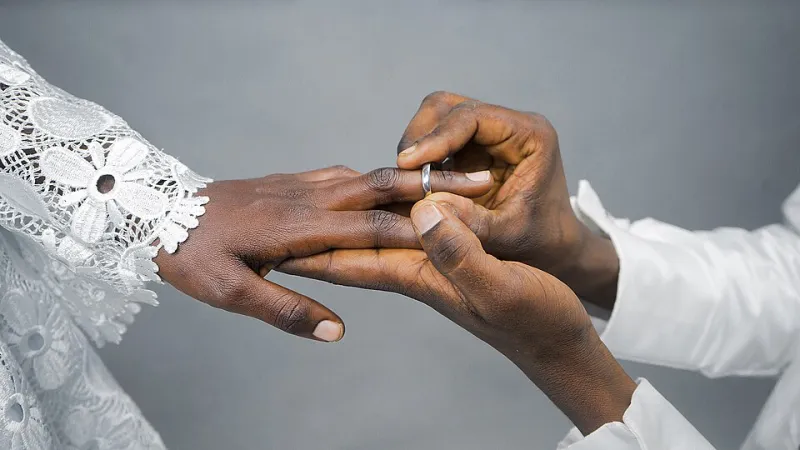
Wedding films are often built from big moments: the vows, the kiss, the first dance. But the bits that keep a film alive years later are usually smaller. The way your grandad holds his cup with both hands. Your nan adjusting his collar without being asked. A handkerchief appearing from a sleeve. A ring that has not come off in fifty years.
And the voice. Please, get the voice. Accents, turns of phrase, the exact way they say your name — these are the things that fade from memory faster than anyone expects. A few seconds of your nan laughing at something your dad said is worth more than a dozen posed family photographs. It is also, quietly, the closest thing to a family archive you will ever make without realising you were making one.
The trick is not to treat them like a nostalgia prop. Do not turn the camera on and say, 'Right, tell us about the war.' Just let them be themselves. If they are funny, let them be funny. If they are quiet, film the quiet. A wedding film that includes an eighty-five-year-old silently buttering a scone is not a failure. It is a document of a real day.
The practical bit: make it easy
Tell your filmmaker early. If you have a shot list, put 'grandparents' on it near the top, before the drinks reception and before the group photos. If your grandparents need a sit-down, find a quiet corner and bring the camera to them rather than herding them into a noisy room. If they are hard of hearing, do not put them in a spot where they have to nod along to a conversation they cannot follow.
Three to five minutes is plenty. You do not need a full oral history. You need a few frames of them being themselves, with decent sound, before the day sweeps everyone up. And if they are camera-shy, film them from a distance while they talk to someone else. They will forget the camera is there far quicker than you think.
Why it lasts
Here is the honest bit. Wedding films are not just for the couple. They are for the family who showed up. In ten or twenty years, a few minutes of your grandad laughing at the speeches, or your nan straightening your veil, will matter more than any choreographed shot of the two of you walking through a field.
It is not morbid to say that. It is just true. The film becomes a way of keeping the room as it was. And the older generation are often the ones we think we will always have time to film later. So do it early. Before the fizz goes flat, before the room gets loud, before the day runs away with itself. Put the kettle on, sit down, and let the camera roll.